
THE KITCHEN CABINET FACTORY
  • HOME
  • CABINETS
  • CONTACT
  • BLOG
kitchen cabinets factory vietnam, RTA kitchen cabinets, Wooden kitchen cabinets, kitchen cabinets factory malaysia
vietnamese cabinet producer, vietnamese kitchen cabinet factory, face framed cabinet,wooden kitchen cabinet, vietnamese cabinet supplier

The Pros & Cons of White Kitchen Cabinets

8/1/2012

 
Vietnam cabinet factory,Vietnam cabinet exporter,RTA kitchen cabinet kitchen cabinet
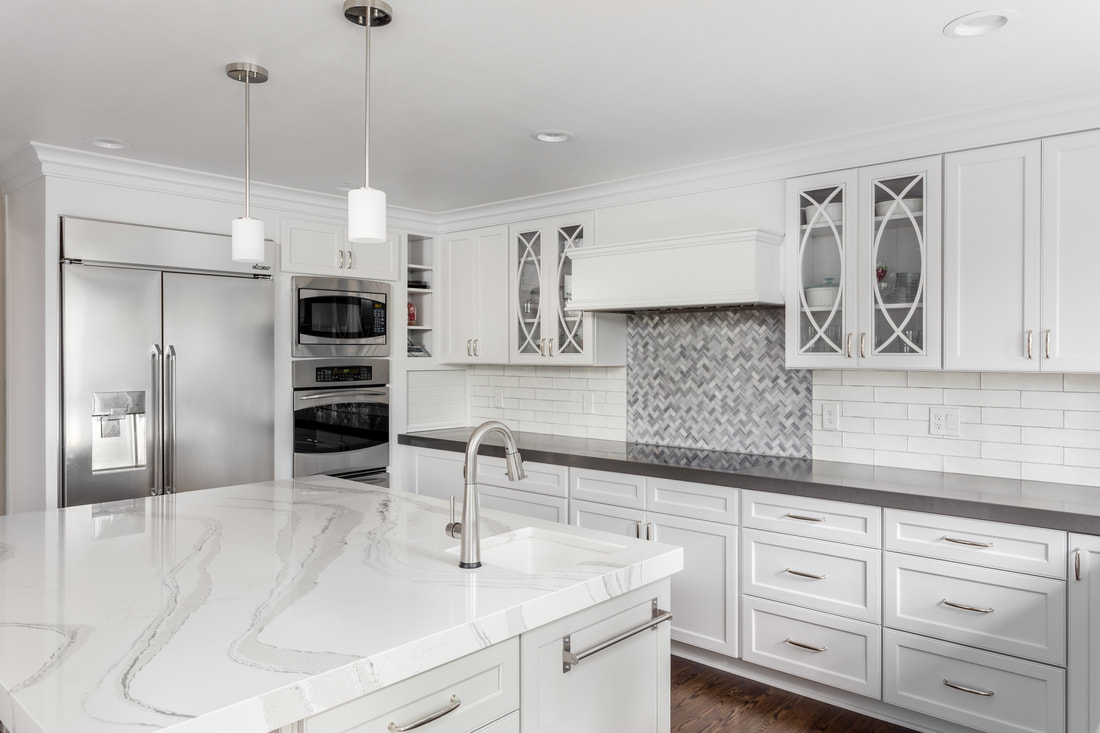
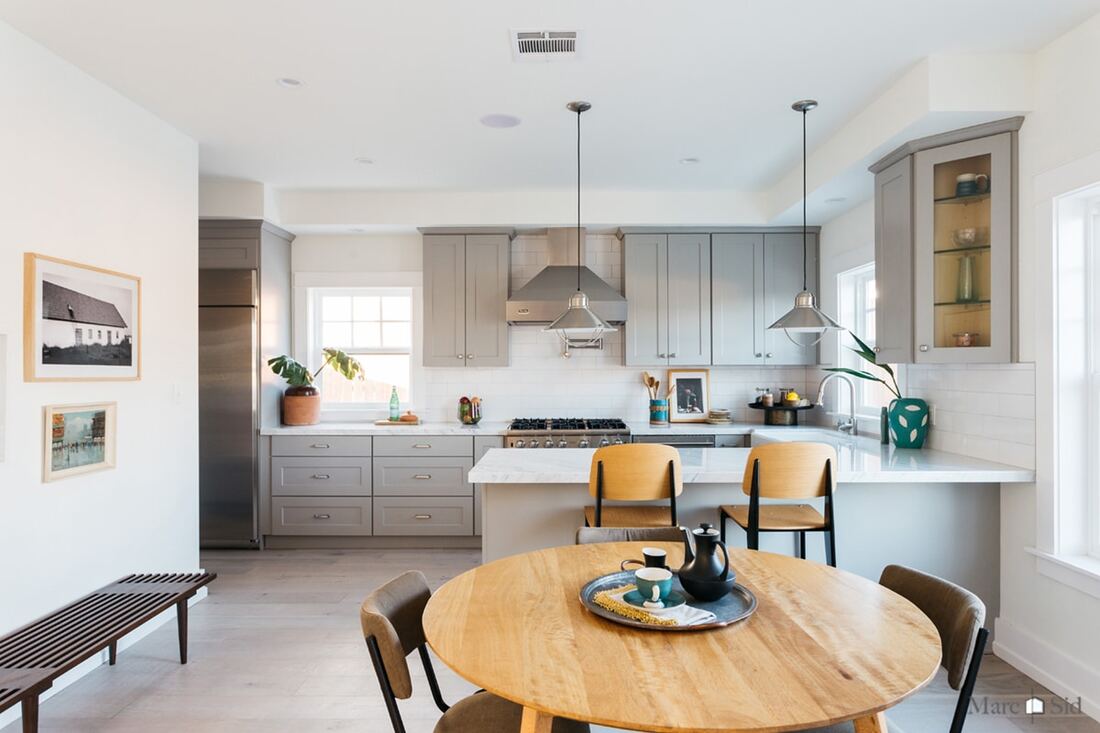
​If you're about to embark on a kitchen design or renovation, you may be considering the all-white kitchen—an elegant, timeless look. However, maintaining a spotless kitchen can be a challenge. 

Below, we consider the upsides and downsides of using white cabinets that may not be immediately obvious, clear some misconceptions, and highlight some of the ways to get around common issues.

The Pros 

White is frequently used for its neutrality and simplicity. These characteristics make white a great base for large areas—like kitchen cabinetry—that are expensive or time-consuming to replace or update.

The simplicity of white cabinets also allow them to rise above short-lived trends, so you never enter your kitchen feeling like it was designed five or 10 years ago, when a particular shade of pink or blue was all the rage. At the same time, white cabinetry also works in just about any style kitchen—from country to vintage-inspired, and from modern to traditional. 

Because of its versatility, white is also easy to update, accessorize, and add to. A kitchen can be given an entirely new personality just by keeping plain white cabinets and changing knobs and other hardware. What’s more, pops of color can be even more impactful next to white cabinetry because of the sharp contrast, so a color palette can be easily understood. 

​Finally, white in general reflects light, so white cabinetry will help to brighten a darker space or a kitchen that doesn’t have any natural light. White cabinets with a glossy finish will further help bounce light around, and can give the illusion of a larger space. 

The Cons

However, there are potentially negative aspects about white cabinets that should be kept in mind as well. Too much white can mean that a space feels clinical and cold, rather than clean and crisp. To avoid this type of situation, consider adding a splash of color or texture, mixing white cabinets with contrasting countertops or backsplashes. You may even choose a darker color for upper or lower cabinets, leaving the rest white. 

Another negative aspect of white cabinets is the constant maintenance and cleaning they require. While white cabinetry doesn’t inherently get dirtier than, say, wood cabinets, it is certainly easier to see smudges, spills, and splashes, which tend to blend in more with darker or patterned cabinets. This also means that white kitchen cabinets need more maintenance beyond just cleaning, since it’s not just food-related dirt that is easily visible. It’s easier to see scratches, worn corners, and delaminating cabinet doors when the cabinets are white, making cabinets show their age more than other cabinet options. 

What’s more, white can discolor over time when exposed to a lot of direct sunlight. But even these negative aspects of white cabinetry can be addressed: spills should be cleaned up quickly to avoid permanent discoloration, and selecting off-white cabinets can be a way to offset potential fading or discoloration from sun exposure.

​In terms of wear and tear, it’s important to consider quality when purchasing white kitchen cabinets. Cheaper white cabinetry will certainly age less gracefully than higher-quality products. If manufactured and installed correctly, white kitchen cabinets can have just as long a life as other finishes and colors.
Kitchen Cabinet Glossary Terms & Definitions

4/20/2010

 
Vietnam cabinet factory, Vietnam cabinet maker, rta kitchen cabinet manufacturing
Need help with some cabinet terms? If "MDF" sounds like a government agency to you, maybe this glossary can help. The terms below are typical words used in the cabinet world. They're listed in alphabetical order.
  • Base cabinet - the cabinet box that sits on the floor. These units usually support the countertops.
  • Carcass - (sometimes referred to as "carcase") The "box" or elemental parts that make up the basic structure of a base or wall cabinet piece.
  • Concealed hinge - a hinge that is not visible on the front of a cabinet door. Concealed hinges are attached to the inside surface of the door.
  • Custom - custom cabinets are cabinets made to a designer's or customer's specifications, with no limitations on sizing, materials and options. They are made-to-order.
  • Dado - a groove that is cut into a piece of material so that another piece may slide into it. The inside surface of cabinet drawers may be 'dadoed' with a groove to accept the drawer bottom panel which helps make for a stronger joint between the drawer side and bottom panels.
  • Dovetail - a method of wood joinery used to connect two pieces that join each other,typically at right angles. The edge of each piece is cut with a number of V-shaped notches that interlock with the adjoining piece forming a very strong joint.
  • Drawer face - The panel that is attached to the front of a drawer box. It is also referred to as the 'drawer front' and is the visible front part of the drawer that the handle is attached to. On some cabinet drawers the drawer face is the front part of the drawer box.
  • Engineered wood - A wood product that is manufactured to enhance the overall qualities of the wood material itself or, to salvage byproducts of wood processing into useful material. Plywood and MDF are two examples of engineered wood products.
  • Exposed hinge - a hinge type that is visible on the outside edge of the cabinet door when the door is closed.
  • Face frame - the wood frame that is attached to the front edges of the top, bottom and sides of the cabinet box. This frame helps provide rigidity to the box. Cabinet designs that incorporate this feature are called "framed" or "face-frame" cabinets.
  • Finish - the surface coating that is applied to a wood cabinet surface. The finish is typically made up of several layers of different materials such as a stain, sealer and clearcoat. The finish is a key element in maintaining and protecting the beauty and durability of the wood surface.
  • Flakeboard - another word used to describe a form of particle board. You may also see the term "furniture board" used which means the same thing.
  • Framed - a cabinet design that uses a 'face-frame' which is typically a wood frame attached to the front edges of the cabinet box.
  • Frameless - a cabinet design that does not use a frame on the front outside edges of the cabinet box. The front of the cabinet box is formed by the edges of the top, bottom and side panels of the cabinet box. The cabinet door typically covers the these edges when closed.
  • Full-inset - a cabinet design whereby the doors fit inside of the face frame when closed (rather than overlapping and sitting on top of the face frame).
  • Full overlay - A cabinet design whereby the cabinet door or drawer front covers all of the face frame so that only the cabinet door is seen with no part of the face frame visible. (Also see "overlay").
  • Furniture board - furniture board is another term for particle board. The term was coined in reference to the particle board that's used in the furniture industry. You may also see the term "flakeboard" which means the same thing.
  • Glaze - a coating applied over the cabinet stain that enhances or changes the color of the base coat.
  • Medium density fiberboard (MDF) - a wood-based product that's produced by the combination of very small wood fibers and a glue, resin or similar bonding agent. MDF can be more easily shaped than products like particle board due to the consistency of the material formed by the small fibers. MDF can be used for shelves, doors (typically painted or covered with melamine) and other cabinet parts.
  • Melamine - a plastic-based, sheet material similar to laminate that is applied to the exterior of cabinets. The substrate or material underneath the melamine is usually medium density fiberboard, particle board or plywood.
  • Mortise and Tenon - a means of wood joinery that involves part of once piece being inserted into a notch or hole in the mating piece. A typical mortise and tenon joint has a square protrusion coming off the end of one piece that fits tightly into a square 'hole' or notch in the piece it's joined to. The pieces that make up the outer frame of a cabinet door might be joined using this technique.
  • Overlay - Overlay refers to the amount of face frame that is covered by the cabinet door or drawer front.
  • Partial overlay -A cabinet design whereby the cabinet door or drawer front partially overlaps the face frame. When the drawers/doors are closed part of the face frame remains visible. (Also see "overlay").
  • Particle board - a wood product made up of very small wood pieces and fragments that are fused together with a glue or resin under mechanical pressure. Particle board is used for cabinet boxes, shelves and drawers.
  • Plywood - a wood product made up of several layers of wood with the grain direction running at different angles with respect to each other. This orientation gives plywood greater strength and stability in comparison to solid wood.
  • Rail - the horizontal pieces or members of a face frame or door frame (in contrast to a "stile" which is the vertical member of the frame).
  • Semi-custom - cabinets manufactured within a range of specific sizes and styles but with a greater number of options and customization available as compared to straight stock cabinets.
  • Stile - the vertical pieces of a face frame or door frame (in constrast to the "rails" which are the horizontal members of the frame).
  • Stock cabinets - cabinets that are manufactured in standard sizes with a fixed range of options such as available wood types, etc. Stock cabinets are pre-manufactured and "off the shelf" products.
  • Thermofoil - A thin vinyl sheet that is formed over a wood or wood-product substrate and bonded to the substrate. Thermofoil provides a surface that's easy to clean due to the low-maintenance requirements of the vinyl material.
  • Toe kick - the bottom piece of a base cabinet that is recessed several inches from the front surface of the cabinet to allow room for a person's feet when standing in front of the cabinet.
  • Varnish - A typically clear paint-like material applied as a coating to provide a protective finish.
  • Veneer - A very thin layer of real wood that is applied over another substrate material such as particle board or plywood. Veneers are used on the sides of exposed cabinets (for example, on the end of a run of cabinets) and on the interior surfaces of the cabinet boxes.
  • Veneer - a thin layer of material (typical reference is to wood) that's applied and bonded to another material. Wood veneers are thin layers of real wood that are literally peeled off the log using special cutting techniques. In cabinetry, wood veneers are used to cover plywood or particle board on external surfaces to provide the outward aesthetics of solid wood without the cost or other drawbacks associated with using solid wood.
  • Vinyl laminate - a composite material made up of paper and resin that have been fused together to form a relatively hard durable surfacing material. Vinyl laminate is used on cabinet surfaces by bonding the laminate to the substrate.
  • Wall cabinet - cabinet boxes that are mounted to the wall.
Forward>>
    Vietnam cabinet factory,Vietnam cabinet exporter,RTA kitchen cabinet, bathroom vanity
    Kitchen Cabinets Factory in Vietnam
    vietnamese cabinet producers, vietnamese kitchen cabinet factory, face framed cabinets,wooden kitchen cabinets, vietnamese cabinet suppliers

    Archives

    February 2026
    August 2025
    March 2025
    February 2025
    May 2024
    March 2023
    November 2022
    July 2022
    April 2022
    February 2022
    November 2021
    October 2021
    May 2021
    April 2021
    September 2020
    August 2020
    June 2020
    February 2020
    November 2019
    February 2019
    November 2018
    August 2018
    October 2017
    June 2017
    January 2017
    December 2016
    March 2016
    July 2015
    March 2015
    February 2015
    August 2014
    April 2014
    September 2013
    June 2013
    March 2013
    October 2012
    August 2012
    July 2012
    May 2012
    February 2011
    April 2010

    Categories

    All
    Cabinet Design Idea
    Cabinet Industry & Business
    Cabinet Knowledge
    Kitchen Cabinet Manufacture

    RSS Feed

kitchen cabinet,rta cabinets vietnam, vietnam kitchen cabinet manufacturers,bathroom cabinet,Vietnam cabinet factory


​SUPERIOR KITCHEN CABINETS DEFINED


HOME

CABINETS

INFORMATION

CONTACT

BLOG


​​​Copyright© Cabinetry Factory ​All Rights Reserved
  • HOME
  • CABINETS
  • CONTACT
  • BLOG